


Glass skin in the Gulf means layering lightweight humectants, sealing with a heat-stable moisturizer, and protecting against both sun and AC dehydration. The key entities to know before you start: hyaluronic acid, niacinamide, beta-glucan, PDRN, snail mucin, occlusives, transepidermal water loss (TEWL), and broad-spectrum SPF. Get these working together in the right order, and the 47°C heat outside or the aggressively cold AC inside, stops being an excuse.
What "Glass Skin" Actually Means
Glass skin is a K-beauty concept rooted in a very specific skin quality: a surface so smooth, hydrated, and luminous that it reflects light the way a pane of glass does. Not glittery, not greasy just an almost poreless, dewy finish that signals a healthy, intact skin barrier.
The term went mainstream around 2017 after Korean beauty blogger Ellie Choi shared her routine, but the idea behind it is older than any trend. In dermatological terms, glass skin is the visual expression of an optimally functioning stratum corneum, the outermost layer of the skin that retains moisture efficiently, has minimal surface texture, and sits flat without enlarged pores or flaking.
People often confuse glass skin with dewy skin or wet-look skin. The difference matters:
- Dewy skin can be achieved with highlighter or a hydrating base. It's a finish.
- Wet-look skin is a makeup technique, often created with a glossy topping product.
- Glass skin is a skin condition, not a product layer. The glow comes from within the skin structure itself, not from what's placed on top.
Achieving it requires consistent barrier repair, strategic hydration, and — especially in the Gulf, a routine that accounts for the actual environment you live in. Global "glass skin" listicles written for temperate climates will get you halfway there. This guide covers the other half.
Why Gulf Heat and AC Sabotage Glass Skin
Here is the frustration nobody talks about: you follow a Korean glass-skin tutorial step for step, you use the right toner and the right essence, and by 11 a.m. your skin either looks dull and tight or has started sliding. Neither is the luminous result you were promised.
The problem is climate-specific biology.
The outdoor heat:
In Dubai, Riyadh, and across the Gulf, summer temperatures regularly exceed 40°C, often reaching 47°C or above with humidity that varies wildly. Dry desert air in the interior, sticky coastal air near the sea. Both extremes accelerate transepidermal water loss (TEWL): the passive evaporation of water through the skin's surface. When TEWL is high, the stratum corneum becomes depleted faster than most standard routines can replenish it. The result is skin that feels tight, looks flat, and breaks its own reflectivity.
The indoor AC:
This is the gap almost every "glass skin" article ignores. The average Gulf resident spends the vast majority of summer indoors, in air conditioning set to 18–21°C. AC strips moisture from the air to a relative humidity of 20–30%, sometimes lower in malls and office buildings. That dry indoor air is just as dehydrating as the heat outside, arguably more so, because the exposure is longer and continuous. Humectants like hyaluronic acid, which pull moisture from the environment into the skin, can actually backfire in very low-humidity environments, drawing water out of the deeper layers instead.
The in-between moments:
Repeated transitions from cold AC to hot outdoors and back again create a constant thermal shock for the skin barrier — one that conventional K-beauty routines, developed for Seoul's climate, simply were not designed to handle.
For our full Gulf-climate K-beauty routine that addresses dry and sensitive skin alongside this issue, see our full Gulf-climate K-beauty routine.
The Heat-Proof Glass-Skin Routine (AM/PM)
The principle here is humectant-led, occlusive-sealed, and feather-light at every step. In Gulf conditions, heavy creams and oil-rich products trap sweat and heat against the skin. The goal is hydration that breathes.
AM Routine
| Step | Product Type | Why It Works in Heat |
|---|---|---|
| 1. Gentle cleanser | Gel or low-pH foam | Removes overnight product without stripping |
| 2. Hydrating toner | Watery essence-toner | First humectant layer — primes absorption |
| 3. Serum | HA + niacinamide or beta-glucan | Multi-weight hydration + barrier support |
| 4. Eye area | Lightweight eye gel | Prevents the crease-puff combo in heat |
| 5. Moisturiser | Gel-cream, non-occlusive | Locks in moisture without forming a sweat trap |
| 6. SPF | Lightweight fluid SPF 50+ | Non-negotiable — UV accelerates TEWL and dulls glow |
Step-by-step for AM:
- Cleanse gently. Do not use a foaming cleanser that squeaks. That squeaky-clean feeling means you've removed too much of your skin's natural lipid layer. Use a gel or low-pH foam and rinse with lukewarm water — cold water constricts pores temporarily but does nothing for hydration.
- Apply toner while skin is still slightly damp. This is not optional in Gulf heat. Damp skin absorbs humectants more efficiently. Pat — do not rub — a watery, fragrance-free toner across the face.
- Layer a humectant serum. Look for multi-weight hyaluronic acid (both high and low molecular weight), niacinamide at 5–10%, or beta-glucan. These draw moisture into the skin and begin reinforcing the barrier. Medicube's hydration and glow lineup includes several options worth considering here.
- Use a gel-cream moisturiser, not a rich cream. In summer, occlusive-heavy moisturisers — shea butter, petrolatum, high lanolin content — sit on top of the skin, mix with sweat, and pill or slide. A gel-cream with ceramides and panthenol gives you the sealing effect without the weight.
- Apply SPF last and press it in. Never rub SPF across the face in Gulf heat. Rubbing disrupts the emulsion and leaves an uneven film that can look white or streaky. Press it in with your palms.
PM Routine
| Step | Product Type | Purpose |
|---|---|---|
| 1. Oil or balm cleanser | Bi-phase or balm | Removes SPF + pollution without stripping |
| 2. Second cleanse | Gentle gel cleanser | Ensures clean base for actives |
| 3. Exfoliant (2–3x/week only) | Low-concentration PHA or lactic acid | Smooths texture without disrupting barrier |
| 4. Treatment toner/essence | Snail mucin, peptide, or PDRN | Barrier repair and skin renewal overnight |
| 5. Serum | Targeted active (see section below) | Address specific concerns |
| 6. Moisturiser | Slightly richer gel-cream or water cream | More occlusive than AM, skin repairs overnight |
| 7. Optional: occlusive layer | Snail mucin gel or light sleeping mask | Seals everything in without suffocating skin |
PM focus is repair, not just hydration:
While you sleep, the skin's natural cell turnover accelerates. PM is when your most effective actives should go on. Snail mucin, high in glycoproteins, hyaluronic acid, and allantoin has earned its place in glass-skin routines not as a gimmick but as a genuine barrier-repair ingredient, well-supported by dermatological literature.
2026 Glass-Skin Actives: PDRN, Peptides, and Exosomes
The glass-skin routine has evolved considerably in the last two years. If your knowledge of K-beauty actives stops at hyaluronic acid and vitamin C, there are three newer categories worth understanding, particularly for Gulf skin that sustains ongoing barrier stress.
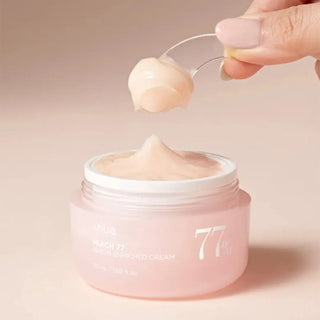
PDRN (Polydeoxyribonucleotide). Derived from salmon DNA, PDRN was originally a medical injectable used in wound healing and aesthetic medicine. It has since been stabilised for topical application. The proposed mechanism involves binding to purinergic receptors in the skin, which may stimulate fibroblast activity, support collagen production, and accelerate tissue repair. Preliminary research is promising, and clinical use in aesthetic medicine predates the topical trend by decades. That said, topical PDRN absorption is limited compared to injected forms, results in serum format are real but more gradual. Look for it as "polynucleotide" or "PDRN" on ingredient lists, typically at concentrations of 0.1–1%. For a deeper look, see our dedicated Medicube PDRN Cream.
Peptides. Signal peptides (like Matrixyl/palmitoyl pentapeptide-4) and carrier peptides are well-established in the evidence base. For glass skin, the relevant mechanism is that certain peptides support the production of type I and III collagen and help maintain the structural integrity of the dermis, the layer beneath the stratum corneum whose health directly influences surface glow. Peptides are heat-stable and won't degrade in Gulf temperatures the way some vitamin C derivatives can.
Exosomes. The newest category, and the one requiring the most caution. Exosomes are extracellular vesicles, essentially cell messengers that, in clinical studies, have demonstrated meaningful skin renewal effects when used post-procedure. Their role in over-the-counter topical products is less established. Some brands are producing stabilised exosome serums with encouraging early data, but "exosome" on a product label is not yet a regulated term. If you're exploring this, look for peer-reviewed backing on the specific formulation, not just the ingredient mention.
For antioxidants that protect glowing skin in Gulf sun including vitamin C formats that actually survive the heat, see our guide on antioxidants that protect glowing skin in Gulf sun.
Sweat-Resistant and Hijab-Friendly Application
This section exists because most glass-skin tutorials assume bare-faced, indoor skin. They were not written with hijab in mind, and they weren't written for a commute in 44°C heat.
The key principle is the press-don't-rub method applied at every step.
Why rubbing kills glass skin in heat:
Rubbing creates friction, which heats the skin surface and disrupts emulsions before they set. In humid or sweaty conditions, rubbing also re-distributes product unevenly, creating patches where the skin has no coverage and other areas where product has balled up. Every step of a Gulf glass-skin routine like toner, serum, moisturiser, SPF, should be pressed in with the palms or fingertips using a gentle tapping motion.
Hijab-line specific steps:
The hairline, jaw, and forehead areas that sit under or adjacent to fabric are the most prone to:
- Product migration from friction
- Sweat accumulation leading to miliaria (heat rash) if heavy products are used
- Barrier disruption from the constant gentle rubbing of fabric
For these zones: use thinner product layers, avoid any product with mineral oil or heavy silicones at the perimeter, and let each layer set (30–60 seconds) before adjusting the hijab. A lightweight, water-based setting spray pressed, not spritzed from a distance — over the finished routine can help lock everything down without making the skin feel coated.
Sweat-resistant layering logic:
The order of humectant → gel-cream → SPF creates a stack that largely sits within the skin rather than on top of it. Unlike a foundation-and-highlight finish that slides off in heat, a properly executed glass-skin base has almost nothing on the surface to move. The glow is structural, not cosmetic. This is why the technique works under a hijab or through a workout — and it's why getting the layering order right matters more than any single product choice.
Common Glass-Skin Mistakes in Hot Climates
Even a well-intentioned routine will fail in Gulf conditions if these errors are present:
Over-exfoliating:
The most common reason for dull, sensitised, non-glassy skin in the Gulf is too much exfoliation, specifically, using AHAs or BHAs daily or in high concentrations without accounting for the ongoing barrier stress from heat and AC. The barrier needs to be intact to produce glass skin. Limit exfoliation to 2–3 times per week maximum, use lower concentrations (lactic acid at 5%, PHA rather than high-percentage glycolic), and always follow with barrier-repair ingredients the same night.
Using heavy, occlusive products in the AM:
Products that work beautifully in Seoul in January, thick cream moisturisers, oil-based serums, petroleum-based sleeping masks, turn into sweat traps in Gulf summers. Reserve richer textures for your PM routine only.
Skipping SPF because it "feels heavy."
UV exposure is one of the primary drivers of barrier degradation, collagen breakdown, and the hyperpigmentation that makes skin look uneven rather than glassy. There are now ultra-light fluid SPFs, invisible finish SPFs, and hybrid SPFs designed specifically for hot-climate wear. Not wearing SPF because it piles on is not a compromise, it's undoing everything else in your routine.
Relying only on humectants without any occlusive seal:
In very low-humidity environments (i.e., heavy AC), pure humectants like hyaluronic acid need something above them to prevent them from drawing moisture in the wrong direction. Even a thin layer of gel-cream with ceramides is sufficient.
Layering too many products at once:
Five serums applied in quick succession in high heat create a product soup that pills, slides, and generates more friction when you press. Simplicity is glass skin's best friend in summer.
FAQ
Can oily skin get glass skin?
Yes, and oily skin actually has some advantages. Natural sebum provides built-in moisture and creates a subtle luminosity that dry skin has to work harder to replicate. The adjustment for oily skin in Gulf heat is to skip heavier gel-creams in favour of a water-gel or lightweight fluid moisturiser, use niacinamide to regulate sebum, and ensure SPF is an oil-free formula. The layering principle remains the same.
Is glass skin possible in hot weather?
Completely. The misconception is that glass skin is a temperate-climate thing. In reality, hot-climate skin can achieve the same result, it just requires heat-stable, lightweight products and a technique (press, don't rub) that accounts for sweat and friction. Many women in the Gulf report better glass skin results in summer than winter because the ambient humidity, even at high temperatures outdoors, can actually support natural hydration.
How long does it take to get glass skin?
With consistent application of the right routine, most people begin to notice improved skin texture and hydration within 2–4 weeks. True glass skin that reflective, almost-poreless quality typically requires 6–8 weeks of uninterrupted barrier support and hydration. Results vary based on starting skin condition, how much prior barrier damage exists, and how consistently SPF is worn.
Does snail mucin actually work in heat?
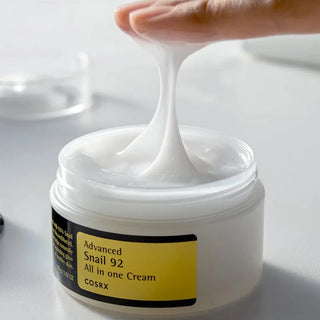
Yes, and it's one of the better-suited ingredients for Gulf skin. Snail mucin (INCI: Snail Secretion Filtrate) is a complex mixture of hyaluronic acid, glycoproteins, zinc, and allantoin that has been studied for wound healing, hydration, and barrier repair. It's thermally stable and lightweight in gel form, making it well-suited for hot-climate use. The texture means it won't sit heavily on skin under hijab or in heat. Use it as a treatment essence in your PM routine or as an occlusive final step.
Can you do glass skin under makeup or hijab?
Yes to both. Under makeup, glass skin acts as the perfect base — a well-hydrated, smooth surface holds foundation more evenly and makes it look more skin-like rather than cakey. Under hijab, the press-don't-rub method keeps the finish intact throughout the day, and avoiding heavy products at the hairline and jaw prevents product migration and heat buildup. Many hijabi women find that glass skin without foundation is actually a practical choice for Gulf summers — the luminosity reads as well-groomed and healthy on its own.
What are the best K-beauty products for glass skin in Dubai?
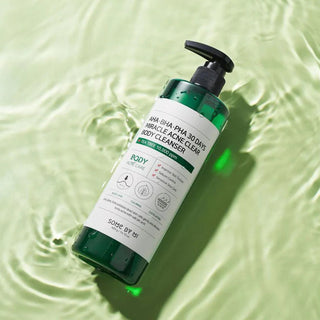
For the Gulf climate specifically, look for water-based toners with beta-glucan or centella asiatica, multi-weight hyaluronic acid serums, snail mucin essences, and gel-cream moisturisers with ceramides. Avoid products with fragrance, alcohol high on the ingredient list, or heavy emollients in AM products. Brands available in the UAE that have strong heat-compatible formulations include Cosrx, Some By Mi, Medicube, and Anua. For reviewed product options, explore Medicube's hydration and glow lineup.
Author
Sara Al-Mansoori
I am a skincare content strategist and writer with over nine years of experience creating evidence-based beauty guides for Gulf and MENA audiences. I hold a certificate in Skincare Cosmetic and specialize in K-beauty adaptation for hot, arid, and AC-heavy climates. My work is grounded in dermatological research, ingredient science, and the real-world experience of maintaining a healthy skin barrier through a UAE summer.


