


A damaged skin barrier shows up as tightness, stinging, redness, flaking, and sudden breakouts. You fix it by stopping actives, simplifying to a gentle cleanser, moisturizer, and SPF, and rebuilding with ceramides over about four weeks. If you over-exfoliated or your face turned reactive after a clinic treatment, this is fixable and faster than you'd think once you stop fighting your skin.
This guide covers the warning signs, the Gulf-specific triggers nobody mentions (AC, hard water, sun, frequent washing), a week-by-week recovery routine, what to avoid while healing, and how to care for skin after a Hydrafacial, laser, or peel.
7 signs your skin barrier is damaged
Your skin barrier, the outer stratum corneum is a wall of cells held together by lipids like ceramides. When that wall breaks down, water escapes (this is called transepidermal water loss, or TEWL) and irritants get in.

Here's how a compromised barrier announces itself:
-
Tightness after cleansing. Your face feels stretched or "squeaky" minutes after washing, even with a gentle cleanser.
-
Stinging from products you used to tolerate. A serum or moisturizer that was fine last month now burns on contact.
-
Redness and blotchiness. Patchy flushing, especially across the cheeks and around the nose, that doesn't calm quickly.
-
Flaking and rough texture. Visible peeling or a sandpaper feel, sometimes with makeup clinging to dry spots.
-
Persistent dehydration. Skin looks dull and feels thirsty no matter how much moisturizer you apply, a classic TEWL signal.
-
Sudden breakouts. A weakened barrier lets in bacteria and inflames the skin, triggering small bumps or congestion you can't explain.
-
Heat, itching, or a "sensitized" feeling. Your face feels warm or reactive to temperature changes, wind, or AC.
If you recognize three or more of these especially after over-exfoliation or a new active, treat it as a damaged moisture barrier and shift into repair mode. One or two mild signs may just mean your skin needs more hydration, not a full reset.
What damages the barrier in the Gulf
Most "how to repair your skin barrier" advice ignores the Gulf environment entirely. Living in Dubai, Riyadh, Doha, or Kuwait City stacks several barrier stressors at once.
Over-exfoliation and active overload: This is the number one cause. Layering AHAs, BHAs, retinol, and vitamin C or using a strong scrub daily, strips lipids faster than your skin can rebuild them. Clinic treatments on top of an aggressive home routine push many people over the edge.
Hard water: Tap water across much of the Gulf is hard and heavily mineralized, often desalinated and chlorinated. Dubai hard water and similar supplies leave a mineral film, raise skin pH, and make cleansers more drying. Washing your face several times a day in hard water quietly erodes the barrier.
Air conditioning: AC runs nearly year-round and pulls humidity out of indoor air. Sitting in a cold, dry office or car for hours accelerates water loss from the skin — that's the "AC drying out skin" effect, and it's relentless here.
Intense sun and UV: High UV exposure damages barrier lipids and proteins directly. Even short walks between car and mall add up, and UV undoes barrier repair if you skip sunscreen.
Frequent washing and wudu: Washing the face five times daily for prayer, often with hard water and sometimes soap, repeatedly disrupts the lipid layer. It's not about stopping, it's about protecting the skin around it with the right moisturizer and a gentle approach.
Harsh cleansers: High-foam, high-pH, sulfate-heavy cleansers feel "clean" but strip the barrier, especially when combined with all of the above.
The takeaway: in the Gulf, barrier damage is usually death by a thousand cuts. Recovery means removing the stressors you control (actives, harsh cleansers, hot water) while shielding against the ones you can't (AC, sun, hard water).
The 4-week barrier recovery routine
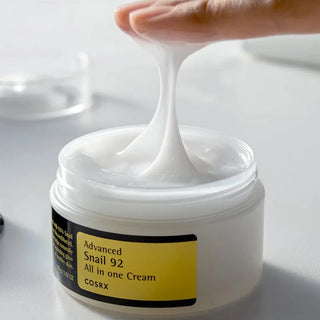
The goal is radical simplicity, then gradual rebuilding. Three products do most of the work: a gentle cleanser, a barrier-repair moisturizer with ceramides, and a mineral-friendly SPF. Hero ingredients to look for are Centella asiatica (cica), panthenol, squalane, niacinamide, and snail mucin for hydration and calming.

Here's the week-by-week plan and what to expect at each milestone.
Week |
Routine |
What you should notice |
|
1 |
Gentle cleanser (PM only) + ceramide moisturizer + SPF |
Stinging and tightness ease; less reactivity |
|
2 |
Same core 3, add a second moisturizer layer at night |
Flaking calms; redness starts to settle |
|
3 |
Add cica or niacinamide serum (low %), patch test first |
Skin feels more comfortable, less "thirsty" |
|
4 |
Reintroduce ONE active, 2x/week max |
Barrier feels stable; texture and tone improving |
Week 1 — Strip it back
Cleanse once a day, at night, with a creamy or gel low-pH cleanser and lukewarm water never hot. In the morning, rinse with cool water only or skip cleanser entirely. Apply a fragrance-free ceramide moisturizer morning and night, and a gentle SPF 30+ every morning. That's it. No serums, no actives, no exfoliation. Most people feel relief within a few days.
Week 2 — Hydrate and seal
Keep the same three products, but add a second layer of moisturizer at night, or a thicker occlusive on top of dry areas to slow water loss overnight. If your skin is very dry from AC, a hydrating toner or essence with panthenol or snail mucin can go on damp skin before moisturizer. Redness should be visibly calmer by the end of this week.
Week 3 — Gently support
Once stinging is gone, introduce one supportive serum, a low-percentage niacinamide or a cica/Centella formula every other day. These calm inflammation and help rebuild lipids rather than strip them. This is also when gentle antioxidants can help; see antioxidants that support barrier recovery for what to add and what to skip. Patch test on the jaw for two days before applying to the whole face. For a full gentle regimen built for this climate, see our gentle K-beauty routine for sensitive Gulf skin.
Week 4 — Reintroduce, carefully
If your barrier feels stable, you can reintroduce a single active, a low-strength retinol or one mild acid at most twice a week, buffered by moisturizer. Add nothing else for at least another two weeks. If anything stings or flares, stop and return to the core three. Many people find they prefer the simpler routine and never go back to heavy actives. Barrier-focused lines like Medicube's barrier-support range are built around this gentler approach.
Want product specifics? Browse our barrier-repair and sensitive-skin collection for ceramide moisturizers and cica serums suited to Gulf skin.
What NOT to do while healing
A damaged barrier needs you to do less. While you recover, avoid:
-
Retinol and retinoids. Pause completely until week 4 at the earliest. They speed cell turnover your barrier can't support right now.
-
Acids (AHAs, BHAs, PHAs). No glycolic, lactic, salicylic, or mandelic acid. They dissolve the very lipids you're trying to rebuild.
-
Physical scrubs and cleansing brushes. No grainy exfoliants, no facial brushes, no rough washcloths. Skip exfoliation entirely.
-
Fragrance and essential oils. Choose fragrance-free formulas; perfume and citrus or mint oils irritate compromised skin.
-
Hot water. Hot showers and hot-water cleansing strip lipids fast. Use lukewarm to cool water only.
-
Vitamin C in high concentrations. Strong L-ascorbic acid can sting a sensitized barrier; reintroduce gently later.
-
New clinic treatments. No peels, lasers, or microneedling until your barrier is fully healed.
-
Over-washing. Cleanse once daily at night; rinse with water otherwise, including around wudu, then moisturize.
If you're tempted to "treat" the breakouts a damaged barrier causes with more actives, resist, that's the loop that got the skin here. Calm first, treat later.

Post-clinic care: Hydrafacial, laser, peels
Clinic treatments are a major barrier-damage trigger in the Gulf because they're often stacked on an already-active home routine and exposed to sun and AC immediately after. Whether you've had a Hydrafacial, laser, or chemical peel, the post-procedure principles are the same: calm, hydrate, protect, and do nothing aggressive.
The first 48–72 hours. Skin is more permeable and reactive right after a procedure. Use only a gentle cleanser, a bland ceramide or panthenol moisturizer, and broad-spectrum SPF. Skip all actives, fragrance, and exfoliation. This is the answer to "what to use after Hydrafacial" — less is more.
Sun protection is non-negotiable. Post-procedure skin burns and pigments easily, and Gulf UV is intense. Apply SPF 50, reapply through the day, and stay out of direct sun where you can. This matters most after laser and peels, where pigment risk is highest. (The American Academy of Dermatology's post-procedure guidance stresses strict sun protection during healing.)
Lasers and peels need extra patience. Expect some redness, peeling, or sensitivity for several days to two weeks depending on depth. Don't pick or peel flaking skin. Keep it moisturized and protected. For skincare after laser in Dubai or anywhere in the Gulf, avoid the urge to resume your "real" routine until your dermatologist clears you, usually one to two weeks minimum.
Manage the AC and hard-water factor. Indoor AC will dry healing skin quickly, so moisturize more often than usual. When cleansing, lukewarm filtered or bottled water is gentler than hard tap water in the early days.
If your clinic gave you specific aftercare instructions, follow those first, they know what was done to your skin.
When to see a dermatologist
Most barrier damage heals at home within a few weeks. See a dermatologist if:
-
Redness, stinging, or flaking persists beyond 4–6 weeks despite a gentle routine.
-
You develop oozing, crusting, swelling, or spreading rash, possible signs of dermatitis or infection.
-
Breakouts become painful, cystic, or rapidly worsen.
-
Symptoms appear after a clinic procedure and aren't improving as expected.
-
You're unsure whether it's barrier damage or another condition like rosacea, eczema, or perioral dermatitis.
A dermatologist can confirm the diagnosis, rule out infection, and prescribe targeted treatment. There's no prize for toughing it out, if your skin isn't recovering, get it looked at.
Frequently asked questions
Q: How long does it take to repair a skin barrier?
A: Mild damage often improves within a few days of simplifying your routine, and most barriers recover meaningfully in about two to four weeks. Deeper damage from heavy over-exfoliation or aggressive procedures can take six weeks or longer. Consistency and patience matter more than any single product.
Q: Can a damaged barrier cause acne?
A: Yes. When the barrier is compromised, it lets in bacteria and triggers inflammation, which can cause sudden bumps, congestion, and breakouts. Treating these with more actives usually makes it worse, calming and rebuilding the barrier often clears the up.
Q: Should I stop all actives?
A: While healing, yes pause retinol, acids, and high-strength vitamin C. Strip back to a gentle cleanser, ceramide moisturizer, and SPF. Reintroduce one active at a time, no earlier than week 4, and only twice a week to start.
Q: Does hard water damage skin?
A: Hard water doesn't tear the barrier on its own, but its minerals and higher pH leave a film, make cleansers more drying, and worsen irritation on already-sensitized skin. In the Gulf, where tap water is hard and you may wash your face often, it's a real contributing factor. A gentle low-pH cleanser and good moisturizer help offset it.
Q: Is niacinamide good for the barrier?
A: Yes. Niacinamide supports ceramide production, reduces water loss, and calms inflammation, which makes it one of the better ingredients for barrier recovery. Use a low concentration (around 5% or less) once your skin has stopped stinging, and patch test first.
Q: Is Vaseline good for barrier repair?
A: Petrolatum (Vaseline) is an excellent occlusive — it seals in moisture and dramatically reduces water loss, which helps a damaged barrier heal. It doesn't add lipids or nutrients, so use it over a ceramide moisturizer as a final overnight seal, not as your only product.
Q: Can I wear makeup while my barrier heals?
A: Light, fragrance-free makeup is usually fine once acute stinging has settled, but skip long-wear or matte formulas that dry the skin, and always remove it gently with a cleansing balm or micellar water followed by your moisturizer.
Q: What does barrier repair feel like when it's working?
A: Less tightness first, then less stinging, then calmer redness, and finally improved texture and hydration. If a product makes things worse at any stage, drop it and return to your core three.
Author:
Sara Al-Mansoori
I am a skincare content strategist and writer with over nine years of experience creating evidence-based beauty guides for Gulf and MENA audiences. I hold a certificate in Skincare Cosmetic and specialize in K-beauty adaptation for hot, arid, and AC-heavy climates. My work is grounded in dermatological research, ingredient science, and the real-world experience of maintaining a healthy skin barrier through a UAE summer.


