


Hormonal adult acne, the deep jawline and chin cysts that flare with your cycle — responds best to a gentle Korean routine built on niacinamide, BHA (salicylic acid), azelaic acid, and barrier support, not the harsh, drying products marketed to teenagers. If you are in your late twenties, thirties, or early forties and breaking out along your lower face, you are dealing with a different problem than a fifteen-year-old with an oily T-zone and it needs a different fix. This guide covers why adult acne behaves the way it does, how it connects to PCOS (which is strikingly common across the Gulf), what a realistic K-beauty routine looks like, how to treat breakouts and early aging at the same time, and when it is time to bring in a dermatologist.
How adult hormonal acne differs from teen acne
Teenage acne is largely a numbers game: a surge of androgens at puberty ramps up oil production across the whole face, pores clog, and you get whiteheads and blackheads spread over the forehead, nose, and cheeks. It tends to be widespread, surface-level, and frustrating as it is usually eases as hormones settle.
Adult hormonal acne looks and feels different. It concentrates on the lower third of the face the jawline, chin, and sometimes the neck — because that zone carries the highest density of androgen-sensitive oil glands. According to the American Academy of Dermatology, women whose acne sits along the jawline and lower face tend to respond well to hormonal therapy, which is a strong clue that androgens are driving it. The lesions are often deep, tender, cystic bumps rather than superficial whiteheads, and they follow a rhythm: many women notice a reliable flare in the week or so before their period, when progesterone drops and the skin becomes more reactive to circulating androgens.
If you have found yourself googling “why am I breaking out at 30” when your teenage years were relatively clear, you are not imagining it. Adult female acne is common and, importantly, it is not a hygiene problem or a sign you are “doing skincare wrong.” The mechanism is internal: androgens signal the sebaceous glands to produce more sebum, that sebum mixes with dead skin cells and traps C. acnes bacteria, and the immune response produces the swollen, painful cyst. Scrubbing harder or stripping the skin with high-strength acids usually backfires, because a damaged barrier inflames easily and heals slowly, which is exactly how you end up with lingering post-inflammatory hyperpigmentation (the brown or grey marks left behind long after the spot itself is gone).
That is the core reason the gentle, layering-first Korean approach suits adult skin so well: it calms and repairs rather than punishes.
Hormonal acne, PCOS and the GCC
For a meaningful share of women, persistent jawline acne is one visible sign of an underlying hormonal condition most commonly polycystic ovary syndrome (PCOS). PCOS is driven by higher androgen levels and is frequently linked to insulin resistance; alongside acne, it can show up as irregular or missed periods, excess facial or body hair (hirsutism), and difficulty with weight. When jawline breakouts arrive with any of those companions, the acne is a symptom, and treating only the skin will always feel like bailing out a boat with a hole in it.
This matters especially for women in the Gulf, because PCOS appears to be notably common in the region. Reviews of Gulf populations estimate that roughly 20–25% of women in the region are affected, and individual studies have reported even higher figures a cross-sectional study in Al Madinah, Saudi Arabia, found about 32.5% of women aged 18–45 met the diagnostic criteria. A 2024 meta-analysis of GCC countries found PCOS in close to three out of every ten infertile women studied, with higher rates linked to older age and higher BMI. The exact number varies by city, age group, and how the study defined PCOS, but the through-line is consistent: this is not a rare, far-away condition. It is one of the most common reproductive-hormone disorders among women of childbearing age in Saudi Arabia, the UAE, and neighbouring countries.
The practical takeaway is not to self-diagnose from a mirror. It is this: if your acne is cyclical and stubborn and you have irregular cycles, unexplained hair changes, or a family history of PCOS, that combination is worth raising with a doctor. A blood panel and, where appropriate, an ultrasound can confirm what topical products never will — and it opens the door to treatments (discussed further down) that address the hormones themselves. Good skincare still helps enormously with comfort, texture, and marks in the meantime; it simply works best when it sits on top of the right diagnosis.
The K-beauty routine for hormonal acne
The goal here is not a fourteen-step ritual. It is a short, repeatable routine that lowers oil and inflammation, keeps pores clear, and crucially protects the barrier so your skin can recover between flares. Four active ingredients do most of the heavy lifting: niacinamide (regulates sebum, calms redness, strengthens the barrier, fades marks), BHA / salicylic acid (oil-soluble, so it exfoliates inside the pore), azelaic acid (anti-inflammatory, antibacterial, excellent on post-acne pigmentation, and one of the few actives considered pregnancy-friendly), and centella asiatica (cica) plus other soothing botanicals to keep everything calm. Look for the word “non-comedogenic,” and introduce only one new active at a time.
A few of the antioxidant-rich, calming ingredients that pair well here — green tea, niacinamide, panthenol are worth understanding in their own right; this guide to antioxidants that calm acne-prone skin explains how to slot them in without overloading your face.
Morning (AM) — protect and calm
1. Gentle low-pH cleanser. A hydrating, non-stripping wash (a hyaluronic-acid or heartleaf foaming cleanser) sets the tone. If your skin feels fine on waking, a plain water rinse is enough.
2. Soothing / niacinamide toner or essence. A heartleaf or centella toner rebalances pH and takes down redness before treatment steps.
3. Niacinamide serum. Your workhorse for oil control and even tone; gentle enough for daily use.
4. Lightweight, non-comedogenic moisturiser. A gel-cream keeps the barrier happy without adding grease.
5. Broad-spectrum SPF 50, every day. Non-negotiable — sunscreen is what actually keeps post-acne marks from darkening, and it is the single most important anti-aging step you own.
Evening (PM) — clear and repair
6. Double cleanse. A non-comedogenic cleansing oil or balm to dissolve SPF and sebum, then your water-based cleanser.
7. BHA / salicylic acid. Start 2–3 nights a week, not nightly, and build up as your skin tolerates it. This is your anti-clog, anti-blackhead step.
8. Azelaic acid (on alternate nights from strong exfoliation) to calm active spots and fade marks.
9. Centella / barrier moisturiser to seal everything in and support overnight repair.
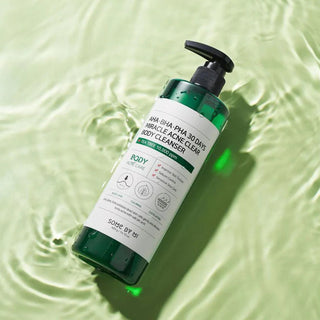
Brands like COSRX, Anua, Some By Mi, Cos De BAHA, and Medicube build entire ranges around exactly these actives at sensible, adult-skin-friendly concentrations. Here are specific options available in the UAE and GCC, mapped to the step each one fills:
|
Routine step |
Key active |
Product (shop) |
|
Gentle cleanser (AM/PM) |
Hyaluronic acid, mild surfactants |
|
|
Oil cleanse (PM, non-comedogenic) |
Heartleaf, fragrance-free |
|
|
Cleanser with mild BHA |
0.5% salicylic acid |
|
|
BHA treatment (PM, 2–3x week) |
2% salicylic acid + niacinamide |
|
|
Multi-acid serum (sensitive) |
AHA/BHA/PHA + tea tree + cica |
|
|
Azelaic acid step |
Azelaic acid + hyaluronic acid |
|
|
Azelaic + niacinamide cleanser |
Azelaic acid, niacinamide, BHA |
|
|
Pore & sebum exfoliating pads |
PHA/BHA (mild) |
|
|
Soothing / explore ranges |
Centella asiatica |
For a deeper look at one of the most clinically minded ranges — and how its pore, sebum, and cica lines fit an adult routine see this breakdown of Medicube’s acne and pore range.
One region-specific note: heat, sun, and heavy air-conditioning change how a routine behaves, and layering acids in Gulf humidity is not the same as layering them in a temperate climate. If you live in the UAE, Saudi Arabia, or elsewhere in the GCC, it is worth reading this guide to adapting an acne routine to Gulf humidity so you are not over-drying skin that the climate is already stressing.
Treating acne and early aging at once
Here is the genuinely unfair part of being an adult with hormonal acne: you are fighting breakouts and the first fine lines at the same time, and half the “anti-acne” advice tells you to strip and dry your skin — which is exactly what ages it. You should not have to choose between clear skin and skin that looks its age. You do not.
The ingredient that resolves this tension is the retinoid family. A retinal (retinaldehyde) or well-formulated retinol does double duty: it speeds cell turnover to keep pores clear and reduce breakouts, and it stimulates collagen to soften fine lines, smooth texture, and fade post-inflammatory pigmentation over time. It is one of the few actives with strong evidence on both problems at once. If retinoids irritate you, common with a compromised barrier, bakuchiol is a plant-derived alternative that delivers gentler anti-aging benefits, and it is often blended with a low dose of retinal to soften the sting. Peptides and niacinamide round out the repair side without adding irritation.
The layering rules that keep this from wrecking your skin are simple:
• Retinal/retinol and bakuchiol go in the PM only. Start 2–3 nights a week and build up.
• Do not stack a retinoid with a strong BHA or AHA on the same night — alternate them. (E.g. BHA Monday/Thursday, retinal Tuesday/Friday.)
• Always follow a retinoid night with SPF the next morning; retinoids make skin more sun-sensitive.
• Buffer with a barrier moisturiser if you feel tight or flaky, and drop frequency before you drop the product.
Gentle, adult-appropriate options on the site include the By Wishtrend Bakuchiol + Retinal Night Cream (a soft entry point that pairs 0.03% retinal with bakuchiol and cica) and, for those ready to graduate to a faster-acting retinal, the Celimax Retinol / Vita-A Retinal Set. If you would rather keep retinal to the delicate eye area first, the Beauty of Joseon Essential Set includes a mild retinal eye serum alongside a propolis + niacinamide glow serum that suits acne-prone skin.
When skincare isn’t enough: spironolactone & derm care
This section is about prescription medicine. Nothing here is a recommendation to start or stop a drug, that decision belongs to you and a qualified doctor.
If your acne is deep, scarring, cyclical, and unmoved by months of consistent topical care, that is not a sign you have failed, it is a sign the driver is hormonal and may need a hormonal treatment. This is where a dermatologist or your doctor comes in, and the AAD’s acne guidelines lay out a recognised ladder of options.
Spironolactone is one of the most-discussed. Originally a blood-pressure medication, at the doses used for acne it works as an anti-androgen — it reduces the hormonal signal telling your oil glands to overproduce. Many women with jawline-pattern acne respond well to it, and it is frequently the tool that finally breaks a years-long cycle. It is prescription-only and physician-supervised for good reason: it requires monitoring, is not suitable in pregnancy, and needs a doctor to weigh it against your health history.
Combined oral contraceptives (COCs) are another hormonal route the AAD recognises for acne, typically showing benefit over 3–6 months. Prescription topical retinoids (stronger than anything cosmetic), and for severe, scarring cystic acne, isotretinoin, sit further along the same ladder. Antibiotics may be used short-term for inflammation but are not a long-term hormonal fix.
See a doctor sooner rather than later if you have cystic or scarring lesions, if breakouts come with irregular periods or excess hair growth (possible PCOS), or if the emotional toll is mounting. Early treatment is the single best way to prevent permanent scarring — and a good clinician will usually keep you on a gentle supportive routine (like the one above) alongside any prescription, not instead of it.
Post-pregnancy and breastfeeding acne
Pregnancy and the postpartum months are a hormonal rollercoaster, and acne is a common passenger sometimes for the first time in a woman’s life, sometimes as a flare of pre-existing hormonal acne. The complication is that several go-to acne actives are off the table while pregnant or breastfeeding, so this is a window where “gentle K-beauty” genuinely shines.
Generally considered pregnancy-safe (always confirm with your own doctor or midwife):
• Azelaic acid — a standout, because it treats both active spots and post-acne marks and is widely regarded as pregnancy-friendly.
• Niacinamide — calming, sebum-regulating, and gentle.
• Centella asiatica, panthenol, hyaluronic acid — soothing and barrier-supporting.
• Broad-spectrum sunscreen, ideally including or paired with mineral filters.
Usually avoided during pregnancy and breastfeeding: retinoids of any kind (retinal, retinol, and especially prescription retinoids and oral isotretinoin), high-strength salicylic acid, and spironolactone. Low-percentage BHA in a rinse-off cleanser is often considered lower-risk than a leave-on high-strength acid, but this is exactly the kind of judgement call to run past a professional rather than a blog.
The reassuring news is that an azelaic-acid-plus-niacinamide-plus-barrier routine covers a lot of ground safely, and much postpartum acne settles as hormones re-stabilise. Be patient with your skin the way you are being patient with everything else right now.
Frequently asked questions
Why am I getting acne at 30?
Adult-onset or persistent acne in your late twenties and thirties is usually hormonal. Androgens stimulate the oil glands along your jawline and chin — the most androgen-sensitive part of the face and breakouts often track your menstrual cycle, worsening in the week before your period. It is not caused by poor hygiene, and clear teenage years do not protect you from it.
Is my acne hormonal or not?
Strong signs it is hormonal: the breakouts sit on your lower face (jawline, chin, neck), they are deep and tender rather than surface whiteheads, and they flare cyclically. If they also come with irregular periods or excess hair growth, that points toward a condition like PCOS and is worth investigating with a doctor.
What are the best K-beauty actives for hormonal acne?
Niacinamide (oil control, calming, fades marks), BHA/salicylic acid (unclogs pores from the inside), azelaic acid (anti-inflammatory and great on pigmentation, plus pregnancy-friendly), and soothing botanicals like centella asiatica. A retinal can be added at night to tackle acne and early aging together. Introduce one active at a time.
Does PCOS cause acne?
PCOS raises androgen levels, and those elevated androgens drive the excess oil production behind hormonal acne, so yes, acne is a very common PCOS symptom, usually alongside irregular cycles and sometimes excess hair growth. Treating the underlying hormones (with a doctor) is often more effective than topicals alone. PCOS is notably common among women in the Gulf.
What are pregnancy-safe acne ingredients?
Azelaic acid, niacinamide, centella asiatica, panthenol, hyaluronic acid, and sunscreen are generally considered safe. Avoid retinoids (retinal, retinol, prescription retinoids, oral isotretinoin), high-strength salicylic acid, and spironolactone. Always confirm your specific routine with your doctor or midwife.
Niacinamide vs BHA for acne: which should I use?
They do different jobs and work well together. Niacinamide is a daily, gentle regulator that calms redness, controls oil, and strengthens the barrier. BHA (salicylic acid) is an exfoliant that clears clogged pores and blackheads, used a few nights a week. Many acne routines use niacinamide every day and BHA 2–3 times weekly.
How long until a K-beauty acne routine works?
Give it 6–12 weeks of consistent use before judging results, since skin-cell turnover takes about a month and hormonal patterns play out over cycles. You may see an initial “purge” with exfoliating actives. If there is no improvement after three months, or if acne is cystic and scarring, see a dermatologist.
Can I use retinol if I have acne and fine lines?
Yes, a retinal or retinol is one of the few ingredients proven to help both at once. Use it at night only, start 2–3 times a week, never stack it with a strong acid on the same night, and always wear SPF the next day. If it irritates you, bakuchiol is a gentler alternative. Skip all retinoids while pregnant or breastfeeding.
Author
About this guide. Written by the MystiGlam editorial team, which specialises in adapting K-beauty for hot, arid, AC-heavy Gulf climates and Fitzpatrick III–V skin. Medical points are aligned with American Academy of Dermatology (AAD) acne guidance and peer-reviewed PCOS prevalence research for the GCC. This content is educational and does not replace personalised advice from a dermatologist or physician. Product availability and formulations may change, verify current SKUs with authorised retailers, and confirm regional registration through your local regulatory body (e.g. the Saudi Food and Drug Authority).


